头部背景图片

Premium 12 Inch Diamond Cutting Blade for Concrete – Laser Welded & Ultra Thin

2025-11-18

Effortlessly! Cutting Green Concrete Like “Butter”


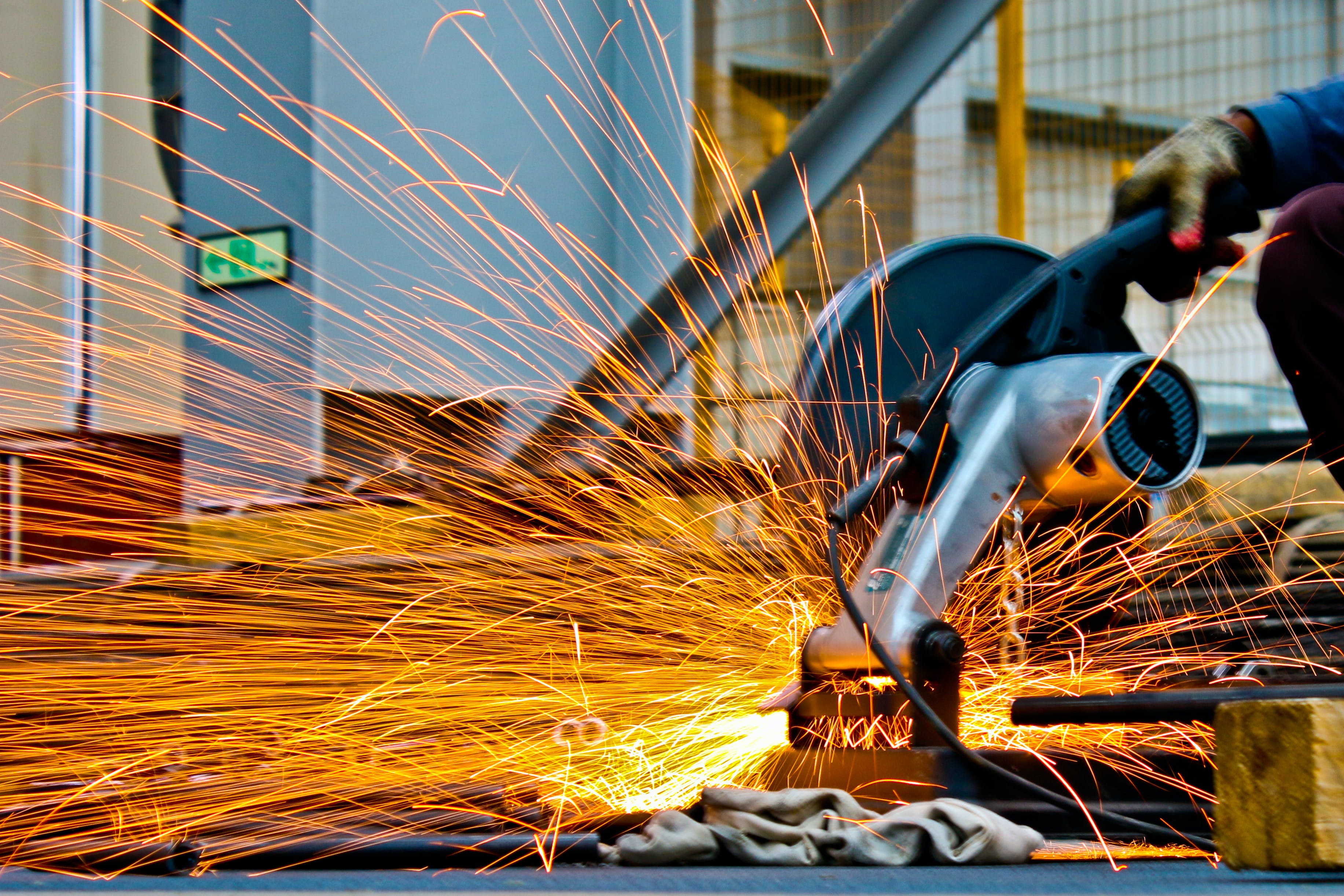
——Up to 27% Less Thickness, 100% More Performance. Imagine this: On a freshly poured construction site, your team can cut just as quickly and produce a surface as smooth as new without frequent stops to clean the segment. This isn’t just fantasy; it’s happening every day for our customers. What is ultra-thin? While our segments of conventional saw blade (3.0mm thickness) delivers reliable performance, SANG New 12 inch Laser-Welded Ultra-Thin Concrete Saw Blade (2.2mm thickness) is engineered to redefine productivity. By concentrating more cutting power into a significantly narrower path, combined with the “protective teeth” design,we offer unprecedented savings in time, material, and cost.

diamond segment


1.Thinner cutting kerf: a labor-saving solution tailored for "highly abrasive" materials.
What We've Done?

We've made the segment incredibly thin, resulting in a cutting kerf that's over a quarter narrower than conventional one.

What This Resulted in?

Reduces friction,less resistance during cutting, lowers energy consumption,makes cutting more efficient,and significantly less concrete lost to powder with each cut. When cutting highly abrasive green concrete, the smaller contact area results in less resistance and smoother chip evacuation, radically reducing entanglement with sticky materials.
What This Means for You?
Whether in everyday construction or emergency projects, the ultra-thin saw blades provide a smooth and fast cutting experience, significantly saving time and energy.

2.Indestructible laser welding: making unplanned downtime a thing of the past.
What We've Done?

We use high-energy lasers to fuse diamond segment with highly elastic steel plates, creating a joint that is far stronger than conventional welding.For highly abrasive concrete, we designed "protective teeth" to protect the welding layer and further prevent the segments from falling off.

What This Resulted in?

Even in high-intensity, high-frequency usage environments, the saw blade still maintains excellent cutting performance, significantly extending its service life, reducing the frequency of replacement and improving long-term cost-effectiveness.

What This Means for You?

Completely eliminate downtime, blade replacement, and even safety accidents caused by segments detachment. Your project progress will be smooth and unimpeded, with stable output quality and brand reputation firmly guaranteed.

3.Precision and environmental protection: a powerful tool for special cutting needs
What We've Done?

The ultra-thin design greatly reduces energy consumption during the cutting process. We have optimized the chip removal capacity and the vibration and noise reduction design, making the entire saw blade more energy-saving and environmentally friendly.

What This Resulted in?

The tool works more smoothly and quietly, avoiding the cracks and unevenness common. Smooth chip removal effectively controls the splash of water-containing dust. This is in line with global trends in green building and sustainable development, and is particularly suitable for markets with stringent environmental requirements.

What This Means for You?

It meets the needs of the modern construction market and can easily meet the construction scenarios with strict environmental protection requirements on noise and dust. Widely used in the field of green concrete, mainly focusing on: cutting of expansion joints and control joints, decorative cutting, local demolition and repair, etc.

Device power and Application scenarios

Device Type
Power level
Typical application
Small handheld cutting machine
Medium-low
Small range, trimming, grooving
Road cutting machine
Medium-high
Outdoor floors, roads, construction sites
Compatible with major international brands of equipment, including Milwaukee, DEWALT,
Husqvarna, Hilti, Stihl, etc.

SANG Diamond Wall Saw Blades Precision Cutting for Concrete Walls

2025-11-18

SANG Diamond Wall Saw Blades are high-performance diamond tools engineered for fast, precise, and smooth cutting of concrete walls and other vertical or horizontal surfaces. Designed for demanding applications, it is the ideal choice for creating clean openings in reinforced concrete, brick, and block.


Key Features & Specifications:

· Blade Types: Configured for both Flush Cut and Standard Cut applications.

· Compatibility: Features standard drive holes to fit a wide range of machine brands, including Husqvarna, Hilti, Tyrolit, Dimas, Hydrostress, and Pentruder.

· Segment Technology: Available in various segment designs (including Arix, flat and Fishtail segments) with specialized bonds for free-cutting action in concrete, reinforced concrete, brick, and block.

· Welding Way: Manufactured with either High-Frequency welding or Laser welding for enhanced durability and dry-cutting performance.

Applications:

SANG wall blades are versatile and used across numerous construction and renovation projects:

· Creating new doorways, windows, and HVAC openings

· Making straight, smooth-finished openings in walls, ceilings, and floors

· Accurately sized, fixture-ready openings

· Bevel cutting for a chamfered edge

· Flush cutting against adjacent wall surfaces

· Heavy-duty work on foundations, dams, levees, and precast walls


Compatible Machinery

Our blades are designed to work with all major brands of wall saws, including:

· Hydraulic, High-Cycle, and Pneumatic wall saws

· Track-mounted systems for precise vertical or horizontal cuts, whether controlled manually or remotely.


Wet vs. Dry Cutting: Choosing the Right Blade

Dry Cutting:

· Use Case: Ideal for situations where a water supply is impractical.

· Consideration: Produces significant dust. For dry cutting applications, we highly recommend our laser-welded blades for superior heat resistance and segment retention.

· Benefit: Maximum portability and convenience.


Wet Cutting:

· Use Case: The standard for most projects where water can be used.

· Benefit: Water suppresses dust, cools the blade, and extends blade life by carrying away abrasive slurry.

· Result: Cleaner cuts, longer blade life, and a safer, dust-free work environment.


Choose SANG for superior performance, reliability, and a blade configured for your specific cutting needs!

Super Thin Laser Welded Diamond Saw Blade for Green Concrete

2025-11-18


The Super Thin Laser Blade for Cutting Green Concrete is a fantastic and highly specific product category. Here is a comprehensive breakdown of the Super Thin Laser Welded Diamond Saw Blade for Green Concrete, covering what it is, why it's used, its benefits, and key considerations.


Why Choose Super Thin Laser Blade for Cutting Green Concrete

The super thin laser-welded blade is engineered specifically to overcome these challenges:

Super Thin: This refers to the blade's segment (the width of the cut). These blades are exceptionally narrow, typically 0.09 inches (2.2 mm). The ultra-thin profile removes less material, creating significantly less friction and vibration. This dramatically lowers the risk of cracking and spalling.

Laser Weld Strength:The laser weld allows the blade to be used on high-speed, precision saws. This enables fast, clean cuts with a focus on finesse rather than brute force.

For Green Concrete:This is the key application. "Green concrete" refers to concrete that has set but not fully cured. It is typically less than 24-48 hours. It is softer and more abrasive than fully cured concrete, but it can crack easily under stress.

Clean, Precise Cuts: The combination of thinness, high speed, and a sharp diamond edge results in a remarkably clean, precise, and smooth cut with minimal cleanup required.

Super Thin Laser Blade for Cutting Green Concrete


Key Advantages & Benefits

Virtually Crack-Free Cutting: The primary benefit. Essential for high-quality concrete finishing and compliance with project specifications.

Reduced Material Waste: A thinner cut means less concrete is turned into dust, saving material.

Faster Cutting Speeds: The blade cuts quickly and smoothly with less resistance.

Clean, Finished Edges:  Eliminates or drastically reduces the need for edge grinding or repair after cutting.


Primary Applications

This Super Thin Laser Blade for Cutting Green Concrete is a specialist tool for specific, high-value tasks:

1. Flatwork/Slab Construction:

Early-Age Control Joint Sawing: This is the most critical application. Cutting control joints in a concrete slab 4-24 hours after pouring to control where cracking occurs.

Cutting for In-floor Heating/Pipes:  Making precise slots in green concrete for utilities.

2.  Precast Concrete Plants:

For trimming, sizing, or creating openings in precast elements like walls, panels, and beams while they are still in their form.

3.  High-Precision Cutting:

Any application on green concrete where a clean, accurate line is paramount and structural integrity must be preserved.

The Super Thin Laser Welded Diamond Saw Blade for Green Concrete is a precision-engineered tool that solves a critical problem in modern concrete construction. By combining a thin, low-stress cutting profile with a strong laser weld, it allows contractors to create clean, controlled joints and cuts in fresh concrete without causing damage, saving time, money, and ensuring a superior final product. It is the definitive tool for quality-conscious concrete professionals.


Which Diamond Saw Blade Is Best for Cutting Quartzite

2025-11-18

Quartzite is one of the hardest natural stones in the world — beautiful, durable, and incredibly tough to cut. For professionals in the stone fabrication and construction industries, having the right diamond saw blade is not just a preference — it’s a necessity. At SANG Diamond Tools, we specialize in high-performance diamond saw blades for quartzite cutting, engineered to deliver precision, speed, and long-lasting performance.

In this blog, we’ll explore:
Why quartzite is so difficult to cut
What makes a diamond saw blade suitable for quartzite
How SANG Diamond Tools stands out in the market
Tips for getting the best results when cutting quartzite


Why Is Quartzite So Hard to Cut?

Quartzite ranks 7 on the Mohs hardness scale — that’s harder than granite and almost as tough as engineered stone. Its dense, interlocking quartz crystals make it extremely durable, but also very abrasive. Standard cutting tools wear out quickly or fail altogether when used on quartzite.

That’s why using a specialized quartzite diamond blade is essential.


Key Features of Diamond Saw Blades for Quartzite Cutting

The ideal diamond blade for cutting quartzite needs to have:

1. High-Quality Diamond Segments
Premium-grade diamonds ensure smoother cuts and longer blade life. At SANG, we use industrial-grade diamonds optimized for quartzite’s high density and abrasiveness.

2. Laser-Welded Segments
Laser welding strengthens the bond between the blade core and the cutting segments, reducing the chance of segment loss under high stress or temperature.

3. Optimized Bond Matrix
A hard bond keeps the blade cutting effectively against soft to medium-hard quartzite, while a soft bond is ideal for harder varieties.

Why Choose SANG Diamond Tools for Quartzite Cutting?


At SANG Diamond Tools, we understand the challenges of working with quartzite and offer a full range of diamond blades engineered for maximum performance.


Precision Engineering
Every blade is tested for balance, segment strength, and cutting accuracy to ensure professional-grade results.

Long-Lasting Durability
Our quartzite saw blades are built to last, reducing your total cost of ownership over time.

Custom Solutions Available
Have a unique requirement? We offer custom blade sizes and segment formulas tailored to your specific cutting needs.

Global Shipping & Support
With fast global delivery and expert customer support, SANG is your reliable partner for stone-cutting tools worldwide.

Tips for Cutting Quartzite Like a Pro
Use water for cooling to prevent overheating and extend blade life.
Start slow and gradually increase feed rate to avoid chipping.
Always check for blade wear before each job.
Use a high-powered saw with adequate RPM and torque.

Cutting quartzite requires more than just brute force — it demands precision, experience, and the right tools. With SANG's diamond saw blades for quartzite cutting, you’ll get the perfect balance of power, speed, and durability.

Ready to upgrade your cutting performance? Contact SANG Diamond Tools today or shop our quartzite blades online.

How can CNC Punch Laser Combined Machine be applied to more factories?

2025-11-10

1. Accurately convey core values and address the "pain points" of factories

When promoting, it is necessary to explain the direct economic benefits it can bring in a language that factory owners and production managers can understand.

"One machine replaces multiple lines", saving space and initial investment

Promotional point: There is no need to purchase separate punch presses and laser machines, reducing the floor space occupied by the equipment, power configuration and basic investment.

Tell the factory owner: "You only need one investment to establish a complete sheet metal processing unit, which is particularly suitable for new factories with limited factory space or those planning new production lines."

Minimize processes to the extreme to enhance efficiency and delivery time

The promotional point: It eliminates the process of transferring, re-clamping and secondary positioning between the punch press and the laser machine. The sheet is clamped once to complete all processing.

Tell the production manager: "The delivery time of your products can be shortened by 30% to 50%." Because there is no intermediate flow or waiting time, it is particularly suitable for small-batch and multi-variety urgent orders.

Break through design limitations and empower high value-added products

Promotional points: The mold-free nature of lasers enables them to easily cut any complex shapes and inner cavities. The high efficiency of stamping allows for rapid processing of louvers, bumps, threaded holes, etc.

Tell R&D/designers: "You can freely design complex products without being restricted by molds." Laser cutting creates elegant curves, and stamping instantly forms functional structures, making your products more unique and competitive in the market.

Reduce reliance on highly skilled operators

Promotional point: One device, one set of programming software (usually integrating stamping and laser functions), and one operator can complete the entire process from programming to production, reducing management and labor costs.


Second, innovate business models and lower application thresholds

The high initial investment is the main reason why many small and medium-sized factories are deterred. It needs to be resolved through a flexible business model.

Financial leasing and installment payments

Cooperate with financial institutions to offer flexible installment or lease plans for factories, converting huge capital expenditures into manageable monthly operating costs.

"Trade-in" program

Encourage factories with old single-function punch presses or laser machines to upgrade their equipment, use the old equipment to offset part of the purchase price, and accelerate equipment iteration.

Establish demonstration factories and experience centers

Establish demonstration sites in industrial zones to allow potential customers to witness the efficient operation of the equipment with their own eyes. They can also bring their own samples for on-site sampling and convince them with actual results.

Cooperate with the sheet metal industry chain

Cooperate with sheet material suppliers, spray painting factories, etc. to provide their customers with packaged solutions of "equipment + materials + post-treatment", increasing their appeal.


Third, promote technological popularization and enhance usability to remove usage obstacles

Make the factory feel that it is "user-friendly, daring to use and easy to use".

Develop more intelligent and integrated software

The software should be capable of automatically identifying the features of the drawings, intelligently recommending whether to use stamping or laser processing (for example, small round holes and holes of the same batch should be stamped, and complex contours should be processed with laser), and automatically generating the optimal processing path to reduce programming difficulty.

Provide strong technical training and support

We offer a full range of training from programming, operation to maintenance. Establish a rapid response local service team to provide 7x24-hour technical support and solve the factory's worries.

Modular and upgradable design

Provide the basic model and reserve the upgrade interface. Factories can first purchase configurations that meet current needs. In the future, based on business development, they can add automated modules such as automatic loading and unloading, sorting and palletizing to reduce initial investment.


Fourth, accurately identify the target industry and customer group

Not all factories are suitable for immediate purchase. It is necessary to find the right breakthrough point.

Core target customers

Sheet metal processing service center: They are the most ideal target users for composite machines because their business is to undertake various scattered and high-demand sheet metal parts.

Equipment manufacturers specializing in multi-variety and small-batch production: such as those in industries like chassis and cabinets, elevators, food machinery, medical devices, environmental protection equipment, and intelligent warehousing equipment.

Innovative enterprises in a period of rapid growth: They have high requirements for production flexibility and product iteration speed, and are willing to invest in advanced equipment to build core advantages.

Potential market

Replacement market: The target is those factories that are still using old-fashioned single-function equipment and have encountered production efficiency bottlenecks. Use the high efficiency of multifunctional machines to convince them to carry out "production upgrades".


if you have more ideas, please contact us!

Tel: +86 -18855551088

Email: Info@Accurl.com

Whatsapp/Mobile: +86 -18855551088

Are cast iron round frying pans safe to use?

2025-10-31

Yes, cast iron round frying skillet pans are safe to use and are actually known for being extremely durable and versatile. They’re great for high-heat cooking, searing, frying, and even baking. However, there are a few things to keep in mind to ensure they stay in good condition and are safe:

  1. Proper Seasoning: Cast iron pans need to be properly seasoned to maintain their non-stick surface and prevent rust. A well-seasoned pan can handle high temperatures and adds flavor to food. If your pan starts to rust or the seasoning wears off, you’ll need to reseason it.

  2. Handling with Care: Cast iron can get extremely hot, so always use an oven mitt or pot holder when handling the pan to avoid burns.

  3. Avoiding Abrasive Cleaning: After use, avoid harsh scrubbing or soaking the pan, as it can damage the seasoning. A little hot water and a stiff brush are usually enough. If you do need to clean it more thoroughly, you can reapply some oil to help maintain the seasoning.

  4. Preheating: Cast iron pans should be preheated slowly, especially if they are cold. Rapid temperature changes can cause them to crack or warp.

  5. Storing Properly: After use, make sure the pan is completely dry before storing it to avoid rusting. You can also apply a thin layer of oil to prevent moisture from getting in.


So, if you take care of it, a cast iron round frying pan is not only safe to use, but it can last for generations!

How to connect materials to the screw jack

2025-10-31

We all know that worm gear screw jacks have two kinds of operation modes: translating screw and travelling nut. Regardless of the operation modes, worm gear screw lifts require a stable, level mounting surface for secure installation.

The housing of a translating screw jack is fixed to the mounting surface, with travel space above and below the mounting surface. The top end of the lead screw connects to the material for up and down movement. Screw end can be designed with various connection options, including flanges, straight rods, threads, fork pins, pinholes, ball joints, making them suitable for installation in various equipment conditions.

worm gear screw jacks


Travelling nut screw jack use a nut connected to the material for up and down movement. There is travel space above the screw actuator's mounting surface, while the lead screw rotates in place. A nut attached to the lead screw connects to the material for up and down movement. The screw end can be either straight rod or threaded. To prevent the screw rod  from shaking during lifting, a bearing seat is required to secure the screw head.

worm gear screw jacks

Problems in using manual screw lifts

2025-10-31

The handwheel driven worm gear screw jack is simple and convenient, making it a good choice for applications where power supply installation is difficult. Worm gear screw lifts are self-locking and are very convenient for fine-tuning equipment where speed and precision are not critical and no electrical connections are required, simply cranking a handwheel or handle can move tons of material.

Customers often ask whether a lead screw jack ‘s handwheel will struggle when driving heavy loads. The answer is yes. While the worm gear drive structure of a screw lift can reduce speed and increase torque, allowing it to move large objects with minimal force, human power is limited. While increasing the lever arm can minimize output torque, there’s no better solution.

When choosing a handwheel-driven screw lift, especially for customers with high travel requirements, they often complain about slow lifting speeds. Worm gear lead screw jacks can be self-locking, but transmission efficiency is low. To increase speed, the lead screw can be made into a double or triple lead. Multiple leads can increase the lead screw’s lifting speed, but they lack self-locking properties. For equipment that requires load retention, a brake device must be considered.


Lead screw jacks can be driven by various motors, connected via matching flanges or couplings. For equipment with limited access to a power source, a handwheel or crank can also be used. Manual lead screw jacks have certain drawbacks when used with large travels and heavy loads. Therefore, manual lead screw jacks are more suitable for equipment that requires less speed and fine-tuning.

hand-operated screw jack

Why Bevel Gear Screw Jacks Have Higher Transmission Efficiency than Worm Gear Screw Jacks?

2025-10-31

worm gear screw jacks vs bevel gear screw jacks


The difference in transmission efficiency between bevel gear screw jacks and worm gear screw jacks mainly comes from their distinct meshing methods and friction characteristics. A worm gear mechanism works similarly to a screw and nut, relying heavily on line contact and sliding friction to transmit motion. Because of the high relative sliding speed, significant energy is lost as frictional heat. As a result, the mechanical efficiency is typically only 30%–50%, and even under precise machining and good lubrication conditions, it is difficult to exceed 60%. In contrast, bevel gears operate much like conventional gear systems. Their meshing involves point or near-line contact, with rolling friction as the dominant mode. Since relative sliding is minimal, the efficiency can reach 90%–98%, with far less energy loss compared to worm gears.


Transmission ratio also plays an important role. Worm gear screw jacks can achieve high gear ratios (such as 1:20 to 1:100), but as the ratio increases, the lead angle of the worm decreases, causing more sliding friction and further lowering efficiency. Bevel gears, however, typically operate within a smaller ratio range (about 1:1 to 1:5), which allows them to maintain high efficiency while also keeping tooth contact stresses at a favorable level.

Another key factor is self-locking capability. Worm gear screw jacks exhibit self-locking because the friction angle is greater than the lead angle, preventing the load from back-driving the worm. This feature eliminates the need for additional braking devices when holding a load, but it also means that energy cannot be transmitted back through the system, reducing efficiency. Bevel gear screw jacks, on the other hand, allow for efficient bidirectional transmission. They lack self-locking capability and usually require a motor brake or mechanical brake to hold the load, but they achieve much higher energy transfer efficiency.

From the perspective of heat management and service life, worm gear screw jacks generate substantial heat during operation due to sliding friction, requiring proper lubrication and cooling. Without this, wear accelerates and service life decreases. Bevel gear systems, by comparison, produce far less heat, demand simpler lubrication, and deliver stable efficiency over long-term operation, resulting in a longer lifespan.

In practice, worm gear screw jacks are better suited for low-speed, intermittent applications where load holding is important, such as stage lifts or valve actuation. Bevel gear screw jacks, by contrast, are ideal for frequent operation, higher-speed transmission, and applications where energy efficiency is critical, such as automated production lines and continuous-duty equipment.


Why the speed in the linkage system of a worm gear lead screw lifter cannot be too fast?

2025-10-31

worm gear screw jacks system

Why the speed in the linkage system of a worm gear lead screw jack cannot be too fast?There are some reasons that should be considered:


1. Safety Considerations

   The screw jack handles heavy loads, and excessive speed may cause loss of control of the equipment or load, increasing the risk of accidents—especially during stopping or emergency braking when large inertial forces occur.

2. Mechanical Structure Limitations
   The worm gear screw jack actuator mainly uses worm gear transmission, which has a strong self-locking feature but relatively low efficiency. Excessive speed can cause excessive wear or damage to the worm gear teeth and lead screw surface.

3. Heat Generation and Dissipation Issues
   High-speed operation increases friction and generates a lot of heat. The worm gear screw lifterassembly has limited heat dissipation capability, which can lead to lubricant failure and overheating of components, shortening equipment lifespan.

4. Reduced Positioning Accuracy
   Machine screw jack actuator are often used where precise positioning is required. Too high speed can cause instability or vibration, adversely affecting work precision and product quality.

5. Limitations of the Drive Motor and Control System
   Excessive speed may exceed the design parameters of the motor and control system, causing overloads, frequent protective shutdowns, or control malfunctions.


Therefore, to ensure safe operation, extend service life, and maintain positioning accuracy, the speed of the linkage system in worm gear lead screw lifters is usually designed to be low and stable.

screw jack platform

Tags
#tt