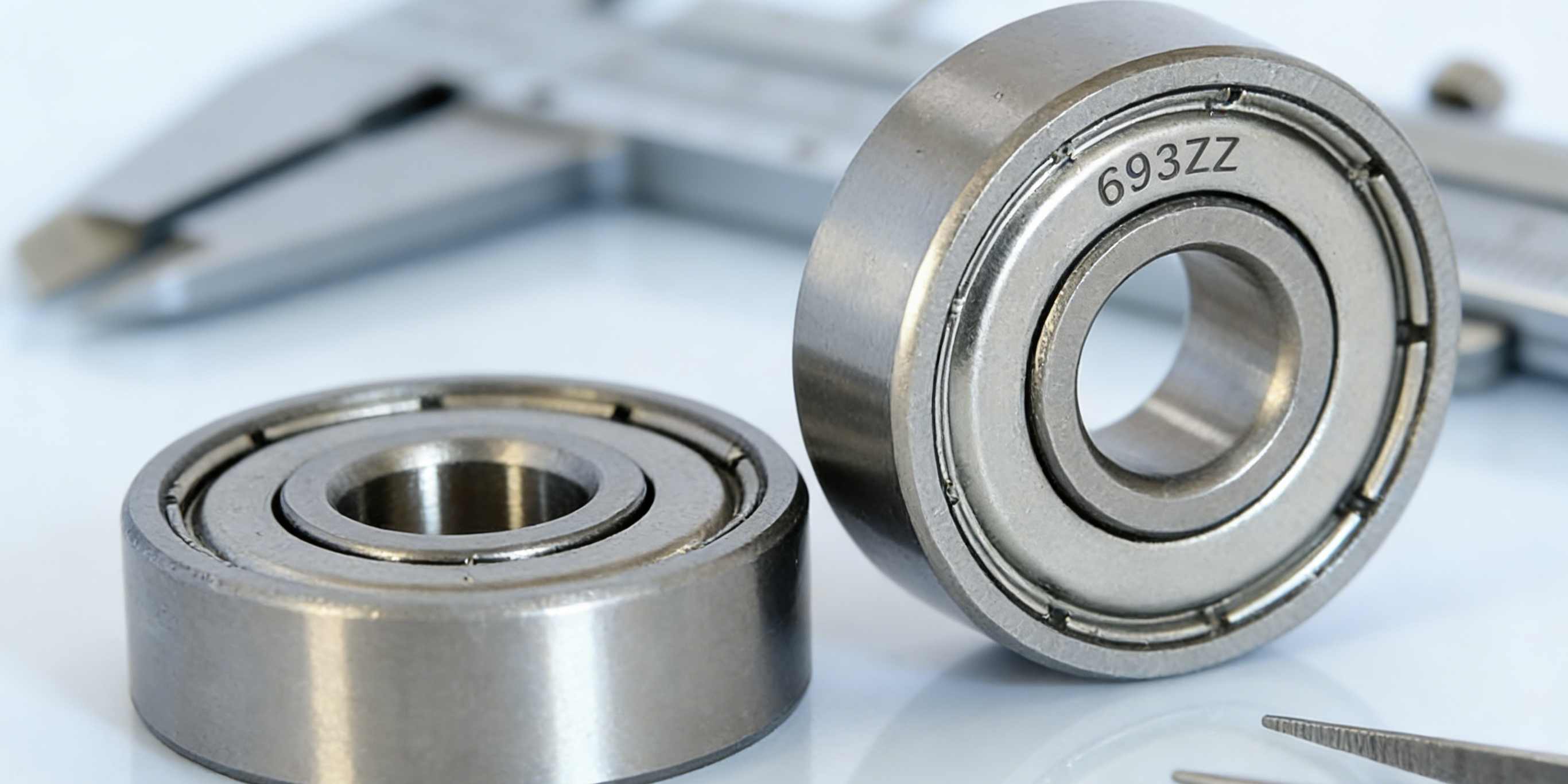
In the world of micro-motors, especially those powering the latest bladeless fans and high-end kitchen appliances, precision is everything. If you are a design engineer or a sourcing manager, you’ve likely encountered the 693 deep groove ball bearing.
But why is this specific model considered the "gold standard"? And why is the ZZ (Metal Shield) version almost always preferred over the 2RS (Rubber Seal) for these applications? Let’s dive into the technical details.
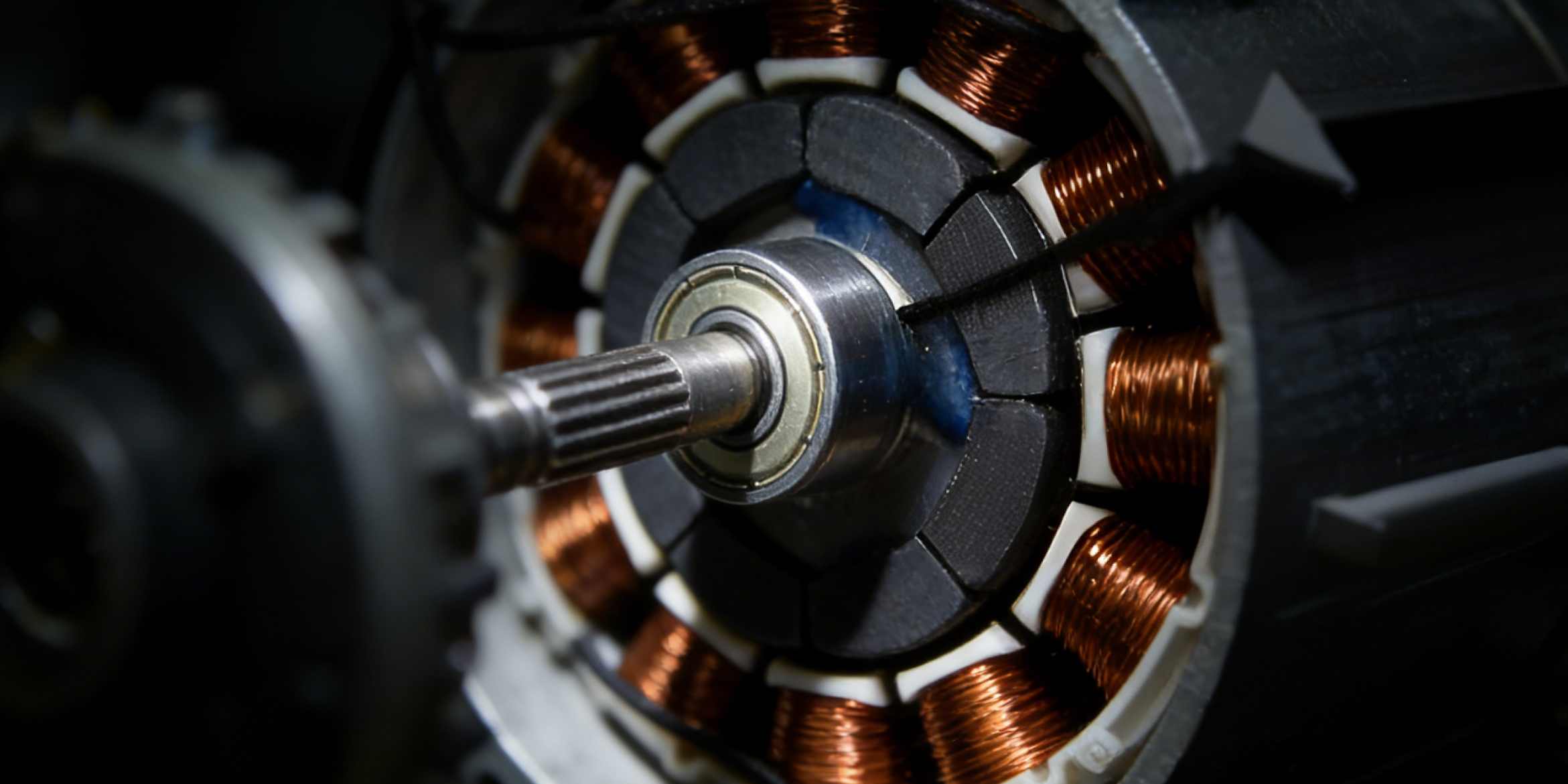
➊ The Bladeless Fan Requirement: Ultra-High Speed
Bladeless fans (and modern hair dryers) rely on high-speed Brushless DC (BLDC) motors to create a consistent, powerful airflow. These motors often operate at tens of thousands of RPM.
- The 693 Advantage: The 693 bearing is engineered for extreme velocity. With standard grease lubrication, it comfortably reaches 60,000 RPM. When specialized with oil lubrication or ceramic components, it can even push boundaries up to 110,000 RPM.
- Performance: Its deep-groove geometry ensures stability even when the centrifugal forces are at their peak.
➋ Home Appliance Motors: The Quest for Silence
For appliances like soybean milk machines, air purifiers, and desktop fans, the "user experience" is defined by noise levels. A "whining" motor is a failed product.
- Electric Motor Quality (EMQ): Leading manufacturers (like Welink) produce 693 bearings to EMQ standards. This involves precision honing of the raceways and rigorous noise testing (e.g., meeting Z4 group standards).
- Low Friction: The inherent design of the 693 minimizes the friction coefficient, ensuring that the only thing the user hears is the breeze, not the bearing.
➌ Compact Design for Modern Micro-Motors
Miniaturization is the current industry trend. Engineers are tasked with fitting more power into smaller housings.
- Micro-Sizing: The 693 boasts a tiny footprint: 3mm (ID) x 8mm (OD) x 4mm (W).
- Lightweight: Weighing less than 1 gram, it allows for high-performance motor designs without adding unnecessary mass or inertia.
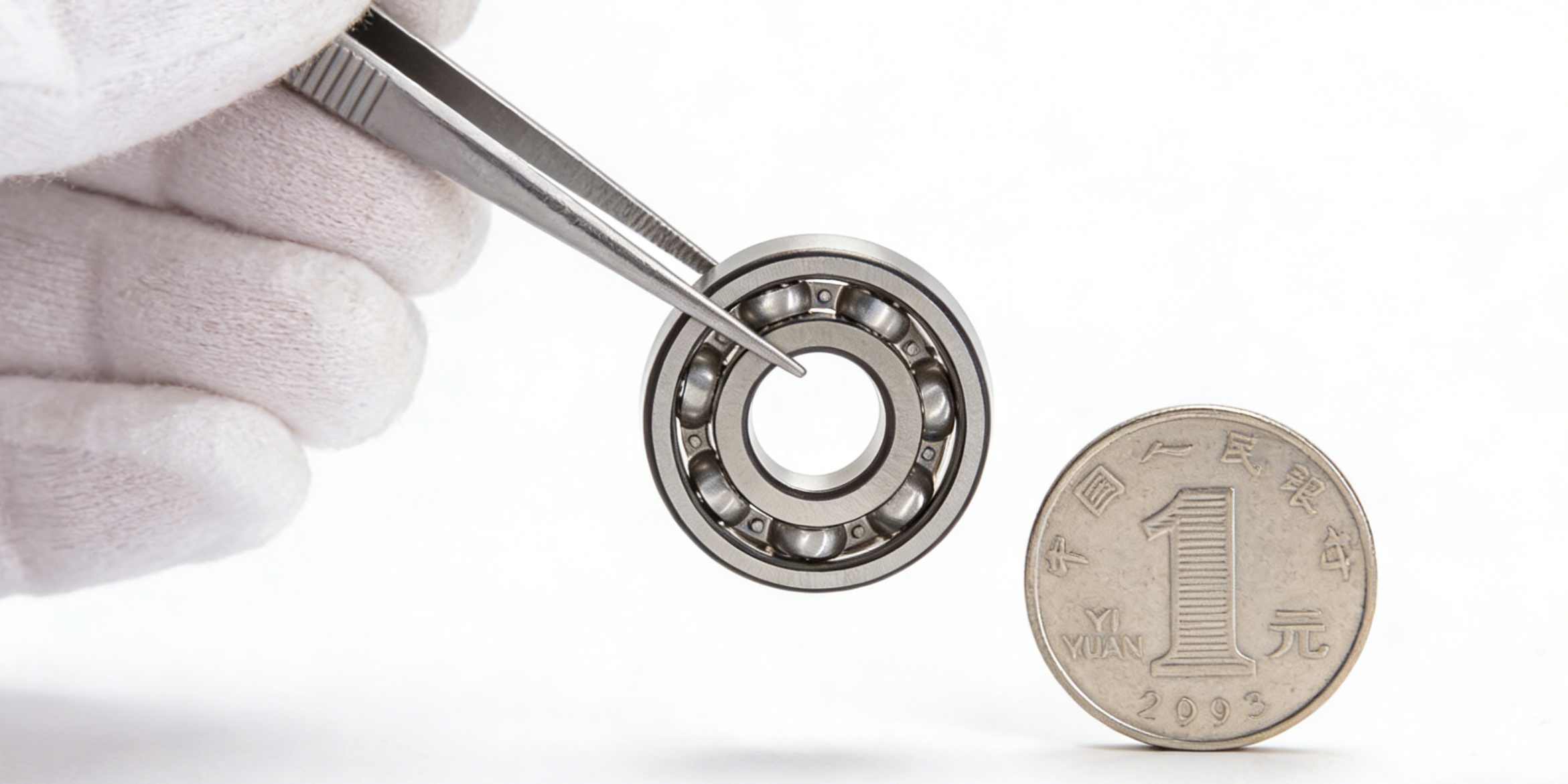
The Great Debate: 693ZZ vs. 693-2RS
While both are "sealed" bearings, their internal physics are quite different. In the context of high-speed motors, the ZZ (Metal Shield) is the clear winner. Here is why:
| Feature | 693ZZ (Metal Shield) | 693-2RS (Rubber Contact Seal) |
| Seal Type | Non-contact (Gap seal) | Contact (Friction seal) |
| Friction | Extremely Low | Higher due to lip contact |
| Max Speed | Optimized for 60,000+ RPM | Lower (Limited by seal heat) |
| Heat Resistance | Excellent | Limited (Rubber may degrade) |
| Best Used For | High-speed fans, BLDC motors | Humid/Dusty environments |
Why ZZ is Preferred for Motors:
The ZZ metal shield provides a "non-contact" seal. There is a microscopic gap between the shield and the inner ring. This means zero added friction, allowing the motor to reach high speeds without overheating.
When to Choose 2RS:
The 2RS rubber seal is a "contact" seal. It offers superior protection against water vapor and fine dust. You should only choose 2RS if your motor is used in harsh environments, such as outdoor equipment or high-humidity kitchen appliances where grease leakage prevention is more critical than raw speed.

Final Selection Advice
Choosing the right 693 bearing isn't just about the dimensions; it’s about the Grade and Lubrication. For premium home appliances, always specify EMQ Grade with high-quality synthetic grease to ensure a long, maintenance-free lifespan.
Need expert advice on bearing selection for your next project? At Welink, we specialize in high-precision micro-bearings tailored for the motor industry.
[Contact our technical team today] or leave a message below to receive a customized quote and technical datasheet.